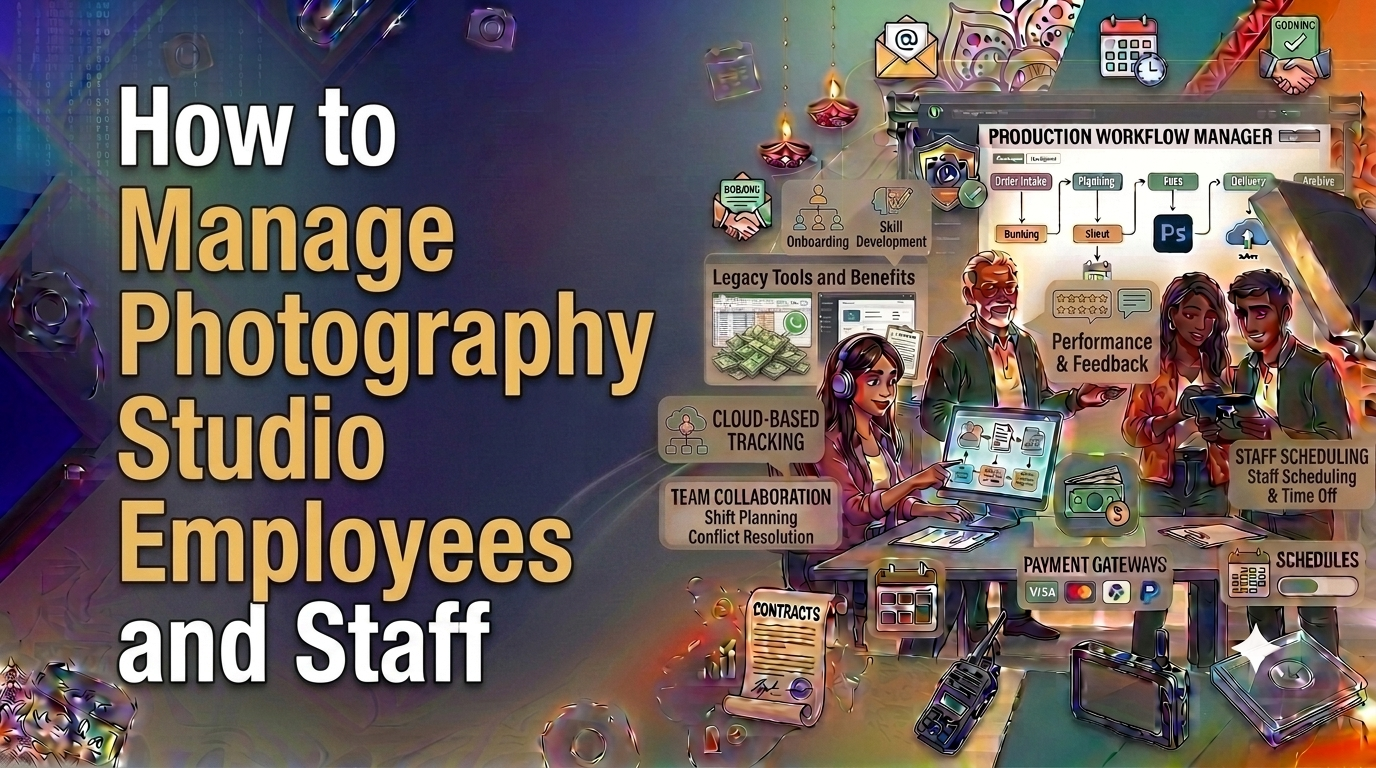
How to Manage Photography Studio Employees and Staff (2026 Guide)
Running a successful creative studio in India requires much more than mastering lighting setups, high-end cameras, and framing. As your business grows from a solo operation into a full-scale creative enterprise, knowing how to manage photography studio employees and staff becomes the single most critical factor determining your profitability, client satisfaction, and personal sanity. Whether you operate a bustling wedding photography enterprise in Surat, a commercial advertising studio in Ahmedabad, or a portrait space in Pune, managing human resources alongside complex creative workflows demands structure.
According to business growth research by McKinsey & Company, organizations that align employee roles with automated workflow systems achieve up to 30% higher operational efficiency. In the Indian photography industry—where a single multi-day destination wedding in Jaipur can involve up to fifteen freelancers, main cinematographers, drone operators, and editors—mismanagement leads directly to delayed album deliveries, missing gear, and unhappy clients.
This comprehensive guide explores actionable frameworks for structuring your studio workforce, handling payroll and commissions under Indian GST regulations, delegating post-production tasks, and leveraging modern digital tools to keep your entire crew synchronized.
1. Structuring Your Studio Team: Core Roles and Hierarchy
Building a resilient photography studio requires defining clear roles so team members do not overlap responsibilities or drop crucial client details. Most Indian photography businesses operate under a hybrid workforce model combining full-time staff, contract editors, and gig-based second shooters.
Defining Full-Time vs. Freelance Staff Roles
Your core full-time team should manage customer relationship management, primary shooting, studio coordination, and master editing. Freelancers and contract crew members should be deployed dynamically during peak wedding dates, corporate events, or high-volume commercial shoots.
- Studio Manager / Client Coordinator: Handles initial inquiries, sends quotations via WhatsApp, schedules client consultations, and manages booking calendars.
- Lead Photographer / Cinematographer: Owns the visual style, directs field crews during events, and maintains creative quality standards.
- Second Shooters & Drone Pilots: Freelance or retainer-based personnel who execute specific event coverage angles and handle secondary equipment setups.
- Senior Editor & Colorist: Full-time staff member responsible for color grading, culling, and client album reviews.
- Junior Retouchers & Album Designers: Contract employees who perform skin retouching, background removal, and album layout assembly.
To evaluate whether your current team structure is balanced, review the functional allocation table below:
| Role Title | Employment Type | Primary Responsibility | Standard Compensation Structure |
|---|---|---|---|
| Studio Manager | Full-Time | Bookings, quotation management, client support | Fixed Monthly Salary + Booking Bonus |
| Lead Photographer | Full-Time / Retainer | Principal shooting, crew leadership | Monthly Base + Per-Event Incentive |
| Second Shooter | Freelance / Daily Basis | Candid coverage, backup angles | Daily Shift Fee (per 8/12 hours) |
| Senior Retoucher | Full-Time | Master color grading & client proofs | Fixed Monthly Salary |
| Album Designer | Freelance / Contract | Page layouts, sheet revisions | Per-Sheet Rate (e.g., ₹150–₹350/sheet) |
2. Hiring, Onboarding, and Setting Clear Performance Metrics
Hiring for a creative studio requires evaluating technical proficiency, punctuality, and soft skills. When hiring photographers and editors in competitive Indian markets, technical skill is only half the equation; reliability under pressure matters just as much.
Standard Operating Procedures (SOPs) for Onboarding
To maintain consistent visual branding across all shoots, document your studio's operational guidelines in standard operating procedures (SOPs). Share these SOPs with new recruits during onboarding so they understand your exact expectations.
- File Management & Folder Naming: Define standard conventions (e.g.,
YYYY_MM_DD_ClientName_Raw) for all camera cards offloaded after a shoot. - Equipment Handover Protocols: Require field technicians to log camera serial numbers, lens conditions, and battery counts prior to leaving the office.
- Client Communication Rules: Direct all client conversations through official business lines or integrated business channels rather than staff members' personal accounts.
- Style Guides for Editing: Provide Lightroom presets, color profiles, and skin tone retouching limits to preserve brand identity across projects.
For additional leadership strategies on building high-performance creative teams, consult Harvard Business Review's guide to managing people.
3. Managing Post-Production Workflows and Creative Deadlines
Post-production bottlenecks are a major operational challenge for growing wedding and commercial studios in India. Delivery delays during peak wedding seasons (November through February) often strain client relationships and generate negative reviews online.
Establishing Pipeline Stages with Task Tracking
Breaking post-production down into discrete, trackable stages keeps projects moving forward and gives team members clear ownership over every deliverable.
- Stage 1: Ingestion & Backup: Offloading RAW files, building local NAS backups, and verifying card integrity within 12 hours of shoot completion.
- Stage 2: Culling & Selection: Narrowing thousands of event shots down to a curated set for client proofing using automated culling software or dedicated staff.
- Stage 3: Color Correction & Master Editing: Applying primary color grades and skin retouching to selected images.
- Stage 4: Client Selection & Album Layout: Delivering online galleries for client selection, assembling album sheets, and managing layout feedback rounds.
- Stage 5: Print Production & Final Delivery: Sending high-resolution print files to lab partners and delivering final hard drives or digital download links.
Integrating specialized software solutions, such as post-production workflow management tools, gives studio owners real-time visibility into editor workloads and helps prevent project backlogs.
4. Gear Tracking, Asset Security, and Field Staff Management
High-end photography equipment represents a major capital investment for Indian studio owners. Lenses, camera bodies, lighting kits, and gimbals frequently pass between full-time staff and freelance shooters, making equipment loss or damage a constant risk without proper inventory tracking systems.
Implementing Gear Check-Out Check-In Systems
To eliminate gear loss across multi-day shoots in distant cities like Surat, Jaipur, or Indore, implement a strict check-out log system. Assign an inventory lead to log camera body serial numbers, test memory cards, and record lens conditions before equipment leaves the premises.
When staff members return equipment, the inventory lead verifies that every item is accounted for and in good working order. Any damaged items are noted immediately so repair costs can be addressed promptly.
5. Payroll, Commissions, and Indian GST Compliance for Staff
Managing employee compensation in India requires balancing base salaries, project performance incentives, and tax compliance. According to macroeconomic insights from the Economic Times, small and medium enterprises in India that implement structured digital payroll and compliance tools cut accounting errors by up to 45%.
Managing GST, TDS, and Freelance Payments
When paying freelance crew members, editors, and second shooters, studio owners must stay compliant with statutory tax requirements:
- Goods and Services Tax (GST): Verify whether freelance contractors are GST-registered. Registered vendors must supply valid tax invoices featuring CGST/SGST (for intra-state services) or IGST (for inter-state services).
- Tax Deducted at Source (TDS): Deduct applicable TDS under Section 194J (Professional Services) or Section 194C (Contractor Services) when vendor payments exceed statutory thresholds during the financial year.
- Digital Payment Reconciliation: Use payment options like PayU or Razorpay alongside built-in payment tracking for photography studios to maintain clean audit trails for all vendor transactions.
To help structure staff compensation models effectively, review the financial breakdown table below:
| Staff Category | Primary Payment Basis | Applicable Tax / Compliance | Incentive Strategy |
|---|---|---|---|
| Full-Time In-House Staff | Fixed Monthly Remuneration | Standard Income Tax / Professional Tax | Quarterly performance bonuses based on project delivery times |
| Freelance Second Shooters | Daily Shift Fee (Per Event) | TDS under Section 194C / GST Invoicing | Early file delivery bonuses (e.g., ₹500 extra for backup delivery within 6 hours) |
| Outsourced Album Editors | Per Sheet / Per Project Fee | TDS under Section 194J (Professional Fees) | Quality incentives tied to zero client revision rounds |
6. Communication Protocols: WhatsApp, Client Updates, and Task Allocation
In the Indian market, WhatsApp is the primary communication tool for client updates and internal team messaging. However, relying on informal group chats often leads to lost messages, missed client requests, and uncoordinated shoot schedules.
Professionalizing WhatsApp & Internal Staff Updates
Rather than managing shoots through random personal chats, adopt systematic communication workflows that tie updates directly to your studio database:
- Automated Booking Alerts: Send automated shoot reminders and schedule updates directly to staff and freelancers.
- Centralized Client Hubs: Route client requests through an integrated WhatsApp messaging integration so studio managers and field photographers stay aligned on project details.
- Standardized Status Tags: Mark projects with simple progress status tags (e.g., Shoot Complete, Culling Pending, Client Proofing Sent, Delivered) so any team member can check status at a glance.
According to consumer research trends published by Nielsen India, messaging applications are used by over 85% of Indian consumers to interact with local service providers. Aligning internal operations with these communication habits ensures swift, professional responses every time.
7. How ClickDesk Simplifies Photography Team Management
ClickDesk is an all-in-one studio management software built specifically for photography studios, wedding filmmakers, and creative agencies in India. Designed to replace fragmented spreadsheets, manual registers, and chaotic messaging groups, ClickDesk provides a single centralized platform to manage lead conversion, shoot schedules, staff permissions, gear allocation, and client billing.
Whether you run a high-volume wedding photography studio in Surat or manage a growing commercial production house in Pune, ClickDesk offers powerful, tailored tools to streamline your daily operations:
- Role-Based Access Control (RBAC): Assign customized user roles for lead photographers, retouchers, and studio managers so staff access only the data relevant to their tasks.
- Automated Task & Schedule Assignment: Assign field crews, second shooters, and post-production editors to specific events with automated notifications.
- Integrated GST Billing & Quotations: Generate GST-compliant invoices and send customized quotes via WhatsApp using integrated order conversion tools.
- WhatsApp API Integration: Send automated shoot reminders, selection galleries, payment receipts, and balance due notices straight to clients via WhatsApp.
- Real-Time Financial & Production Reports: Track outstanding client balances, team delivery speeds, and monthly revenues using comprehensive reporting tools built for studios.
- End-to-End Post-Production Tracking: Monitor every stage of editing, album design, client proofing, and print delivery in a visual pipeline dashboard.
Ready to upgrade your studio's operational management? Explore our complete list of features on our features guide or review scalable subscription plans on our pricing plans page.
Empower your photography team with centralized task assignments, automated WhatsApp client updates, and effortless GST invoicing today. Learn more about ClickDesk or visit our photography studio management blog for more industry insights. Start your free ClickDesk trial today →
8. Frequently Asked Questions (FAQ)
How do I calculate per-event commissions for freelance shooters in India?
Commissions should be calculated based on shift duration, skill level, and equipment ownership. You can structure payments via a base daily rate (e.g., ₹5,000–₹12,000) plus bonus incentives for on-time delivery of raw files. ClickDesk automates commission tracking by linking shooter assignments directly to project billing.
What is the best way to prevent gear theft or damage among studio staff?
Implement a strict check-in/check-out asset log system using QR tags or software tracking. Require staff to verify gear condition before leaving for shoot locations in cities like Jaipur or Pune, and maintain clear sign-offs for accountability.
Should Indian photography studios hire full-time editors or freelancers?
A hybrid model works best. Retain a core full-time editor for signature retouching, color grading, and quality control, while outsourcing bulk culling and basic album layouts to trusted freelancers during high wedding season peak months.
How does ClickDesk assist in managing studio team permissions?
ClickDesk provides role-based access control (RBAC). Studio owners can assign specific roles (e.g., Lead Photographer, Retoucher, Client Manager) so team members only view the client contacts, order details, or task lists relevant to their duties.
How do I manage GST invoices when paying freelance photography crew?
Ensure registered freelancers issue valid tax invoices with correct GSTIN details (CGST/SGST for intra-state, IGST for inter-state). If hiring unregistered freelancers, maintain proper expense vouchers to record Reverse Charge Mechanism (RCM) applicability where applicable.